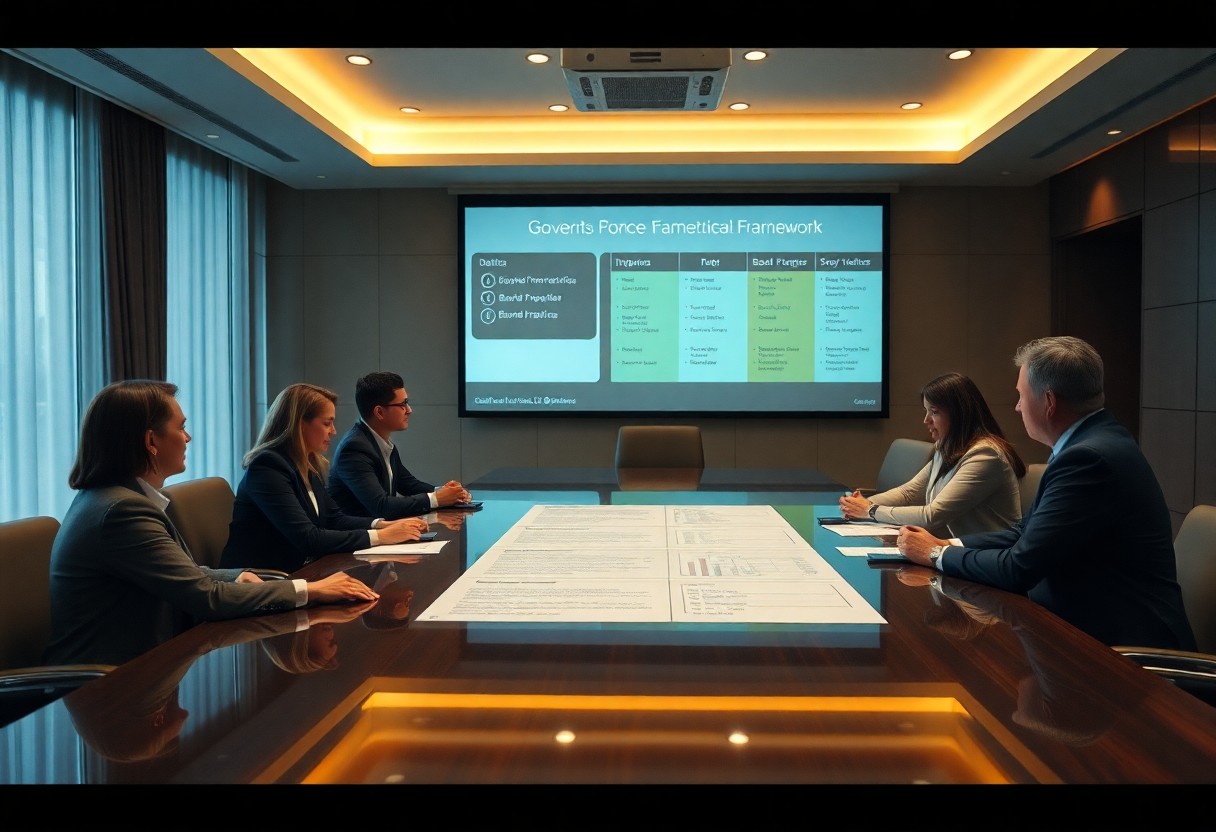


Just because technology moves fast doesn’t mean you can’t equip your leadership: prioritize AI literacy, ethical data use, and strategic digital fluency through practical workshops, scenario-based simulations, and cross-sector mentorship. You should build measurable learning pathways, embed change management and evaluation into programs, and foster partnerships with tech experts to translate innovation into mission impact. Your training must be iterative, accessible, and aligned to organizational goals.
Key Takeaways:
- Develop hybrid competencies: teach leaders AI literacy, data fluency, ethical frameworks, and hands-on tool use so they can evaluate and guide technology decisions.
- Use applied, iterative learning: train via mission-aligned pilots, cross-functional projects, coaching, and measurement to accelerate adoption and scale.
- Align technology with mission and equity: prioritize impact-driven use cases, stakeholder engagement, governance, privacy, and investments in infrastructure and partnerships.
Understanding the Impact of AI and Digital Innovation
AI and digital tools are reshaping how you deliver programs, raise funds, and measure impact: McKinsey estimates AI could add $3.5-5.8 trillion annually to the global economy, and nonprofits are using that tech to automate donor segmentation, speed grant reporting, and monitor projects with satellite imagery (Global Forest Watch). You should plan for faster decision cycles, tighter data governance, and staff roles that blend program expertise with digital fluency.
The Role of Technology in Nonprofits
You can deploy CRMs (Salesforce Nonprofit Cloud, Blackbaud), BI dashboards, chatbots, and low-code platforms to centralize data, automate outreach, and scale services. For example, automated donor journeys improve personalization while chatbots handle intake and FAQs, freeing caseworkers for higher-value tasks. Train your teams on integration, vendor selection, and ongoing monitoring so technology augments mission work instead of creating new silos.
Key Trends Shaping the Sector
Generative AI (GPT models) accelerates content and campaign creation while ML improves beneficiary targeting; satellite and remote sensing inform environmental and humanitarian programs; low-code/no-code tools shorten deployment cycles; and data privacy laws like GDPR and CCPA require stronger governance. You should also track vendor consolidation, API-first interoperability, and funder expectations for real-time, measurable outcomes.
Dive deeper by prioritizing data literacy, ethical AI practices such as algorithmic impact assessments, and procurement criteria that demand model transparency and dataset provenance. Equip your staff to mitigate bias, obtain consent-based data, and define KPIs-pilot one AI-assisted workflow (e.g., donor segmentation or monitoring) with clear success metrics before wider rollout.
Essential Skills for Nonprofit Leaders in the Digital Era
You must prioritize a tight set of capabilities that translate mission into measurable impact: data literacy, digital product thinking, user-centered design, cybersecurity hygiene, partnership-building and change management. Focus on 3-5 skills to train first, assign measurable KPIs, and create cross-functional teams so your organization can move from pilots to scaled programs within 6-12 months.
Data Literacy
You should be able to translate raw numbers into decisions: build dashboards with Power BI or Google Data Studio, segment donors using RFM, and track 3-5 KPIs like donor retention rate, cost-per-dollar-raised, and program outcome metrics. Start with Excel or SQL basics, run monthly cohort analyses, and use A/B testing on one campaign per quarter to prove what actually increases engagement.
Adaptability and Innovation
You need processes that make change predictable: run 6-8 week pilots, form 5-7 person cross-functional squads, and require short demo reviews so successful pilots scale quickly. Use low-code tools (Airtable, Zapier) to prototype, and allocate a small innovation fund to de-risk experiments while maintaining ongoing services.
You can institutionalize adaptive practice by setting explicit learning goals for every pilot, logging outcomes in a shared “failure and insight” board, and measuring three things-speed to decision, impact per dollar, and learning value-after each cycle. Apply rapid feedback from beneficiaries, pair qualitative interviews with quantitative metrics, and reward teams for validated insights rather than only for polished rollouts.
How-to Foster a Culture of Continuous Learning
Implementing Training Programs
You should build a blended learning pathway: 10-15 minute microlearning for fundamentals, a 6-8 week cohort course for applied AI skills, and project-based assignments with clear KPIs. Pilot with 20 staff, run pre/post assessments and 30-day application checks, then scale based on results. Leverage Coursera or an LMS, link outcomes to performance goals, and budget $500-$1,500 per learner annually to forecast capacity and measure ROI.
Encouraging Collaboration and Knowledge Sharing
You should create 5-8 person learning pods, run weekly 30-minute standups plus monthly 60-minute innovation demos, and use Slack/MS Teams plus a searchable wiki. Pair cross-functional teams for 8-12 week mini-projects, track pilots, lessons logged, and tools adopted, and set a goal of three experiments moving to production each quarter to keep momentum and show tangible value.
You should standardize facilitation and documentation: rotate a facilitator, require an agenda and three deliverables, and use an experiment template (hypothesis, metric, timeline). Assign a knowledge steward to tag summaries, publish short case studies in your wiki, and reward contributors with public recognition or small stipends so learning becomes visible, repeatable, and embedded into onboarding and planning cycles.
Tips for Leveraging AI Tools Effectively
You should prioritize high-impact, low-risk pilots-automate donor acknowledgments, use NLP to summarize grant reports, or deploy chatbots for routine volunteer queries-and set clear KPIs like response time, donor retention, and error rate. Pilot programs often show 20-50% efficiency gains in outreach and reporting, so budget for data cleanup, ethics review, and staff training before scaling.
- Start with 4-8 week proofs of concept tied to one measurable KPI.
- Compare total cost of ownership: integration, hosting, and staff time over 12 months.
- Require basic explainability and bias tests for any model used in decision-making.
- Assume that you will need ongoing vendor management, model retraining schedules, and a plan for fallback when systems fail.
Identifying Relevant Technologies
You map mission priorities to tech by matching predictive analytics to donor churn, NLP to document triage, and RPA to repetitive finance tasks; evaluate candidates on data readiness, API compatibility with your CRM, and expected ROI over 6-12 months, and run a small pilot (4-8 weeks) to validate assumptions before procurement.
Integrating AI into Nonprofit Operations
You should phase integration: prototype on a subset of cases, instrument logging for audit trails, connect models to your CRM via APIs or middleware, and assign a product owner to monitor performance and user feedback; expect initial gains in the 10-20% range for throughput or response time if the dataset is healthy.
You operationalize by creating an AI playbook: define data schemas, set role-based access controls, schedule model retraining every 3-6 months based on drift, and run A/B tests to measure impact; train frontline staff with 4-8 hour hands-on workshops, keep an incident runbook for failures, and allocate 10-15% of project budget for ongoing maintenance and integrations using low-code iPaaS tools to avoid vendor lock-in.
Factors to Consider When Training Leaders
Balance technical skills, change management, data governance, and program alignment when designing your curriculum; prioritize role-specific pathways, budget phasing, and stakeholder engagement via pilots:
- Skills – AI literacy mapped to roles
- Systems – data access, APIs, security
- Scale – pilot, iterate, embed
Nonprofit Leaders and AI: A 6-Week Guide offers a practical sequencing template. Knowing how these factors interact helps you set priorities that deliver early wins and long-term capacity.
Understanding Organizational Needs
Start by mapping 2-4 high‑value use cases tied to mission metrics (donor retention, program reach, service turnaround). You should audit current workflows, data sources, and decision points, then score gaps by impact and feasibility; for example, prioritize a fundraising AI pilot that can boost donor segmentation accuracy within 8-12 weeks over a broad, unfocused tool rollout.
Measuring Training Success
Define baseline diagnostics and 3-5 KPIs such as completion rate, pre/post skills scores, tool adoption rate, and mission impact (e.g., % reduction in process time). You want targets like 70% cohort completion, 25% lift in tool use within six months, and demonstrable task-time savings tied to funded outcomes.
Operationalize measurement by running pre/post assessments, monthly adoption dashboards, and quarterly outcome reviews. Combine quantitative metrics (completion, usage, time-to-decision) with qualitative evidence (participant interviews, case studies). Use cohort controls or staggered rollouts to attribute changes, report ROI to funders, and iterate curricula based on where your metrics fall short of targets.
How-to Create a Strategic Plan for Digital Transformation
You should build a 12-18 month roadmap pairing outcomes with 2-3 tech pilots, allocate 10-15% of your annual tech budget to capacity building, and define KPIs like cost per beneficiary and hours saved; track quarterly and stop or scale based on ROI. A mid-sized nonprofit expanded services by 40% after a 9‑month AI pilot. For framing ideas and vendor approaches see Three solutions for a philanthropic reset in an AI world.
Setting Clear Goals
You should define SMART goals tied to measurable KPIs: target a 20% efficiency gain, 80% staff adoption within six months, and a 15% reduction in cost per beneficiary. Collect baseline metrics over 30 days, publish a quarterly dashboard, and run A/B tests across two program sites to validate impact before scaling.
Engaging Stakeholders and Building Support
Map stakeholders into five groups-board, staff, volunteers, funders, beneficiaries-and run three co‑design workshops to surface needs and risks; appoint a governance committee of 5-7 members to review pilots, and name a board champion who communicates progress monthly so you secure early buy-in.
You can run a six‑week human‑centered design sprint with weekly two‑hour sessions, recruit 10-15 frontline staff plus 12 community members, and offer $50 stipends to hit a 70% participation rate; use short surveys and a Slack channel for real‑time input, track engagement by NPS and adoption rate, and leverage the board champion to reallocate budget-one health nonprofit engaged 120 residents and reached 65% adoption in six months.
Final Words
Presently you must blend practical AI skills, ethical literacy, and digital strategy into targeted training that uses hands-on labs, scenario planning, coaching, and short iterative learning cycles; this helps your leaders develop data fluency, govern technology responsibly, and align innovation with mission impact. Prioritize partnerships, measurable outcomes, and continuous learning pathways so your organization adapts quickly and sustains community-focused value in an accelerating digital landscape.