

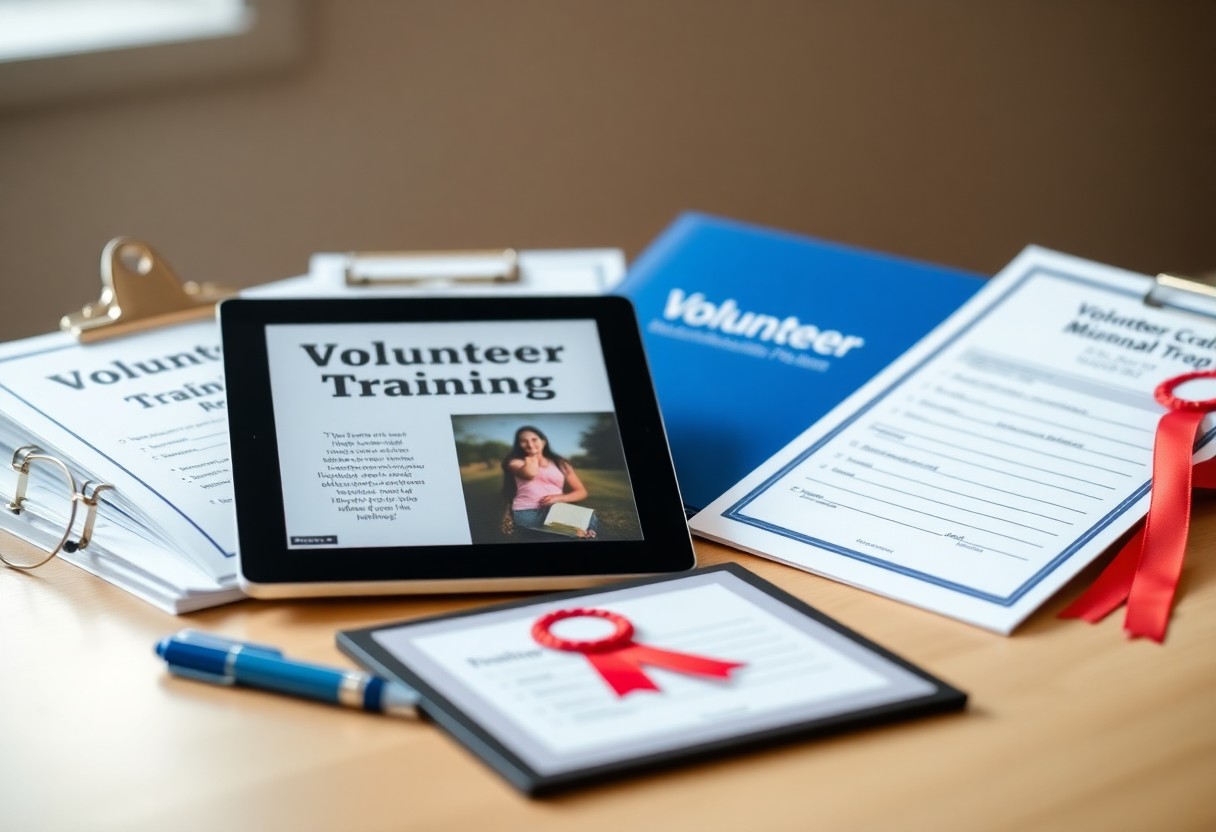
Leadership starts when you train volunteers with clear roles, practical skills, mentorship, and feedback so you build capable leaders, improve retention, and ensure mission continuity.
Key Takeaways:
- Design structured, role-specific training with clear objectives, hands-on simulations, and measurable success criteria to develop leadership competencies.
- Pair volunteers with experienced mentors and assign progressive responsibilities and decision-making roles to build practical leadership experience.
- Create routine feedback cycles, measurable performance reviews, and recognition linked to retention to identify leaders and improve training.
Identifying Core Leadership Competencies for Volunteers
Identify the core competencies you must assess-communication, decision-making, accountability, and team coordination-to shape volunteer leaders through targeted training and clear expectations.
Defining the leadership vision within your nonprofit
Clarify the long-term leadership vision you want volunteers to follow, linking responsibilities to mission, values, and measurable outcomes that guide your training and role design.
Key factors that distinguish potential leaders from general volunteers
Observe behaviors that signal leadership potential-initiative, reliability, clear communication, and adaptability-as you design targeted development paths.
- Initiative and proactive problem-solving.
- Consistent reliability and follow-through on tasks.
- Clear communication and constructive feedback skills.
- Knowing how to motivate peers and manage conflict with composure.
Assess volunteer history, feedback, and situational responses to spot readiness; then assign stretch roles and mentorship so you can observe conflict management, strategic thinking, and delegation skills.
- Test conflict management through challenging scenarios.
- Evaluate strategic thinking via planning tasks.
- Measure delegation and follow-up in team projects.
- Knowing how they perform under accountability shows readiness for leadership.
How-To Design a Comprehensive Volunteer Training Program
Design your training program to map role-specific skills, learning milestones, and assessment points so you can build consistent standards, track progress, and adapt content based on volunteer performance and feedback.
Aligning curriculum with organizational goals
Align your curriculum to mission-driven competencies, set measurable outcomes, involve program staff in mapping skills, and schedule regular reviews so you can report impact and adjust training priorities.
Implementing structured mentorship and shadowing opportunities
Implement clear mentor roles, pairing criteria, shadowing timelines, feedback checkpoints, and short-term learning goals so you can accelerate practical skill transfer and strengthen volunteer readiness.
Pairing experienced volunteers with new recruits requires you to train mentors on coaching techniques, set structured shadowing schedules, define observable tasks, use reflection prompts, and track competency gains so you can measure progress and assign graduated responsibilities.
Essential Factors for Sustaining Volunteer Engagement
Sustaining volunteer engagement requires you to align roles, training, and regular communication so volunteers feel capable and connected. Thou must track engagement metrics and address concerns promptly.
- You define clear roles and expectations.
- You offer accessible, ongoing training sessions.
- You provide timely feedback and recognition.
Creating a culture of continuous feedback and recognition
Encourage regular, brief feedback loops so you catch issues early and publicly recognize contributions, keeping volunteers motivated and aware of their impact.
Providing clear pathways for internal advancement
Provide transparent role maps and required skills so you can see promotion routes, reduce attrition, and help volunteers plan measurable growth.
Clarify competency milestones, required hours, and learning modules for each step so you make advancement practical and predictable. You can assign mentorship matches, stretch assignments, and micro-credentials to validate progress, and schedule regular reviews to keep movement fair and visible.
Practical Tips for Empowering Volunteers to Take Initiative
Use clear goals, decision frameworks, and staged autonomy so volunteers take initiative while you monitor outcomes and offer timely feedback.
- Define role guides you use to set decision boundaries and success indicators.
- Schedule brief checkpoints you run to focus on outcomes, not micromanagement.
- Perceiving a volunteer’s strengths lets you assign tasks that spark initiative and sustained contribution.
Delegating high-impact responsibilities effectively
Assign high-impact tasks by matching skills, outlining authority limits, and providing measurable outcomes; set regular but light-touch reviews so volunteers learn responsibility without feeling abandoned.
Utilizing digital tools to facilitate remote leadership
Adopt collaborative platforms, clear file structures, and async check-ins so remote volunteers can lead projects with clarity and accountability.
Combine video onboarding, role-specific templates, shared task boards, and short training modules so you build consistent competence across dispersed teams; monitor participation analytics to spot engagement gaps, enforce secure access controls to protect data, and hold regular office hours for real-time guidance, helping you scale hands-off leadership while keeping quality high.
Measuring the Impact of Leadership Training Initiatives
Measure training outcomes by tracking volunteer leadership behaviors, program results, and community impact so you can prove return on investment and guide future curriculum improvements.
Establishing KPIs for volunteer performance and retention
Set clear KPIs-hours, task completion, leadership roles taken, satisfaction scores, and retention rates-so you can evaluate volunteer growth and predict long-term program sustainability.
Adjusting strategies based on quantitative and qualitative data
Use survey feedback, observation notes, and performance metrics to refine training modules, leadership pathways, and support systems according to volunteer needs and organizational goals.
Analyze both numeric trends and narrative insights to prioritize changes: cross-reference satisfaction scores with retention, observe behavior shifts during projects, and pilot small curriculum tweaks; you should track outcomes across cycles, document lessons, and scale methods that improve leadership practice and volunteer commitment.
Conclusion
Upon reflecting, you can build strong nonprofit leadership by training volunteers with clear roles, practical skills, mentorship, ongoing feedback, and leadership pathways that align with mission goals, so volunteers grow into confident, accountable leaders who sustain organizational impact.