

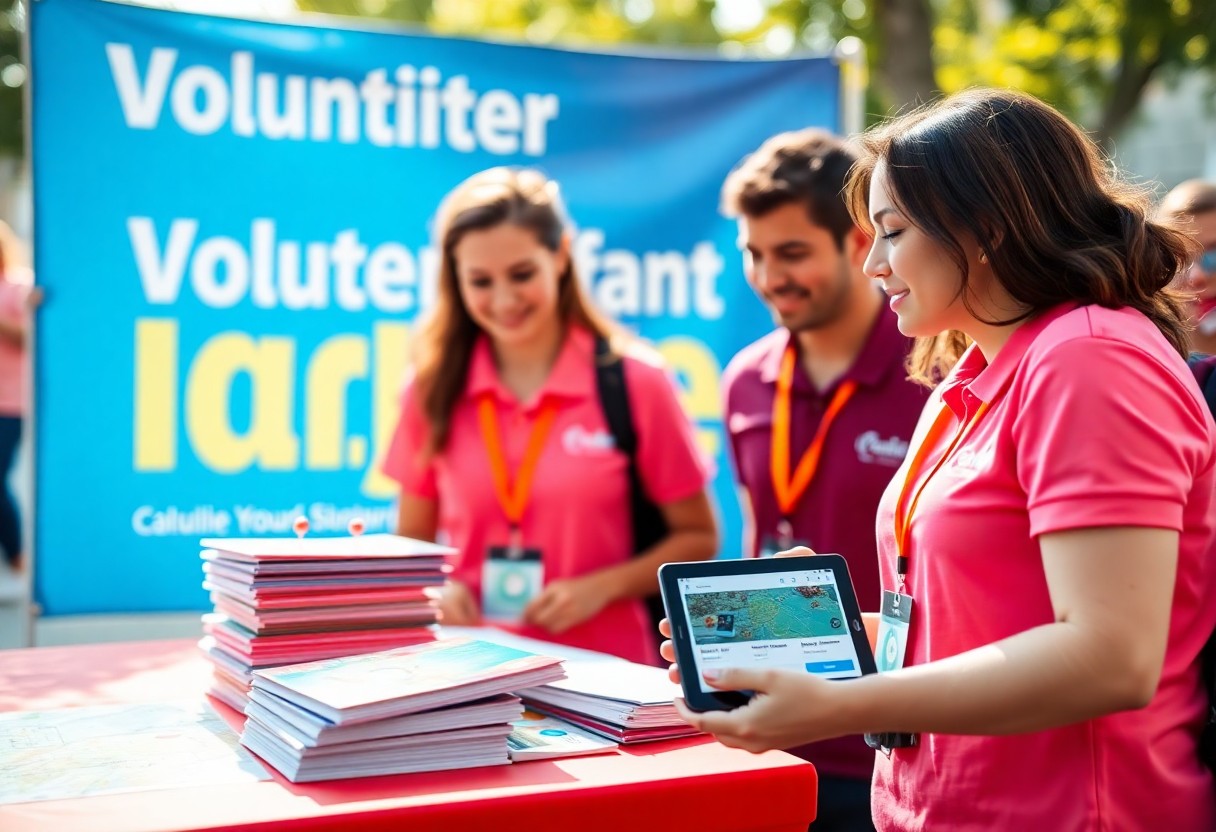
Many volunteer ambassadors extend your reach by using local relationships, speaking at community meetings, distributing materials, and sharing your message online; they act as trusted messengers who provide local insight, amplify credibility, generate word-of-mouth momentum, and deliver measurable feedback so you can target outreach effectively and strengthen community support.
Recruiting and Selecting Ambassadors
Target a manageable cohort-start with 10-15 ambassadors per city or 2-3 per neighborhood-to pilot roles, then scale. Require a baseline commitment (3-5 hours/week) and define KPIs like monthly reach, three community events/year, or 20 qualified leads per quarter. Use clear role descriptions, tiered responsibilities, and a simple rewards structure (public recognition, gift cards, training). Track retention and engagement monthly so you can iterate on selection criteria and outreach channels based on real performance data.
Ideal profiles, local networks, and outreach channels
Seek community anchors: small business owners, PTA leaders, faith group coordinators, campus org presidents, and micro-influencers with 1k-10k followers. Tap networks such as chambers of commerce, neighborhood associations, sports clubs, and community centers. Use Nextdoor and local Facebook Groups for hyperlocal posts, Instagram Stories for younger audiences, and flyers at farmers markets for offline reach. Expect 3-7% conversion from cold outreach; partnering with an existing group (e.g., a co-op or school) can yield 20-50 interested candidates quickly.
Application, vetting, and onboarding steps
Use a short online form (5-8 fields), then schedule a 15-20 minute screening call to assess fit and availability. Follow with reference checks and a role-appropriate background check if needed; assign a 1-2 week trial task to evaluate execution. Run a 60-90 minute group onboarding covering goals, tools, content guidelines, and reporting cadence; pair each newcomer with a mentor for the first month to boost retention and speed up impact.
Include specific application fields (name, networks, typical weekly hours, sample outreach ideas, two references) and screening questions about past advocacy examples and conflict scenarios. Flag red flags like inconsistent availability or inability to provide references. Design a trial task (one neighborhood outreach, 3 social posts, or hosting a pop-up) with measurable outcomes. Equip new ambassadors with a one-page playbook, branded assets, a content calendar, and access to Slack/Trello; set first-month KPIs (reach, signups, event leads) and review at 30 days.
Training and Equipping Ambassadors
You should run a structured onboarding: a 2-hour live session, a 30-minute self-study module, and a 1-hour role-play practice. Set expectations for time (4-6 hours/month), give quarterly 45-minute refreshers, and measure via KPIs-event attendance per ambassador, 30-day lead conversion, and social impressions. Use a short certification quiz with an 80% pass rate to verify readiness.
Messaging, storytelling, and brand consistency
You should provide three concise talking points, a 15-30 second elevator pitch, and two 60-second local stories each ambassador can use. Include voice samples and one-page do/don’t guidelines. For example, a chapter in Austin grew monthly sign-ups 40% after volunteers practiced a single personal-impact story during weekly 30-minute role-plays.
Tools, collateral, and communication protocols
You should supply a one-page cheat sheet, 12 pre-approved social posts, two email templates, a branded slide deck, and an FAQ pack in a shared folder. Integrate UTM-tagged links into your CRM and create a Slack channel for real-time support. Limit image files to under 5 MB and provide SVG logos for crisp scaling.
Host assets in a central brand portal (Google Drive or Brandfolder), include PNG, SVG, and PDF exports, and list exact size specs (1200×630 for social, 600×400 for thumbnails). Implement standard UTM parameters for source/campaign, use two subject-line variants for email A/B tests, and define a 24-hour response SLA with a clear escalation matrix for urgent inquiries.
Local Outreach Tactics
You can deploy volunteer ambassadors across coordinated local channels to multiply reach: schedule tabling shifts at 8-12 weekend events per quarter, assign micro-ambassador teams to three priority ZIP codes, and track outcomes with simple KPIs like sign-ups, event RSVPs, and media mentions. Use weekly briefings to iterate messaging and allocate high-value shifts to your most experienced volunteers for peak hours and high-traffic venues.
Community events, partnerships, and grassroots engagement
Have volunteers staff booths at farmers’ markets, school fairs, and community festivals-aim for 2-3 volunteers per 3-hour shift to cover outreach and lead capture. Form partnerships with local libraries, PTAs, and faith groups to co-host 4-6 neighborhood meetups annually. Train ambassadors to collect contact info, run 10-minute info sessions, and convert casual conversations into concrete next steps like event RSVPs or volunteer sign-ups.
Social media, local press, and neighborhood influencers
You should equip ambassadors to amplify content on Nextdoor, Facebook groups of 500-5,000 members, and Instagram Reels tailored to local interests; provide 6 ready-to-post captions and two image templates. Pitch neighborhood reporters with a one-sheet under 250 words and a local angle-volunteer success stories, upcoming events, or data points. Track shares, referral traffic, and earned-media placements weekly to refine outreach.
Build a compact media kit that ambassadors can use: a one-page fact sheet, three 20-30 second testimonial clips, high-res logo, and two headline options for pitches. Instruct volunteers to post 3 times/week across local channels and to tag neighborhood influencers; follow up press pitches within 48 hours and offer reporter interviews with a local ambassador. Measure success by engagement rate, referral sign-ups, and number of placements secured.
Managing Performance and Impact
You align ambassador activity to measurable goals by assigning clear KPIs-monthly leads, event RSVPs, conversion rate, and retention-and tracking them with referral codes and UTM parameters. Set targets like 10 leads and 2 RSVPs per ambassador per month, automate data flow into your CRM or Airtable, and run weekly dashboards. For example, a community health group used unique codes and saw clinic sign-ups rise 40% in three months after enforcing this tracking discipline.
Metrics, tracking, and reporting systems
Focus on metrics that link effort to outcome: reach, impressions, engagement rate, referral conversion, attendance rate, retention, and cost-per-acquisition. Instrument every touchpoint with UTMs, unique referral codes, and CRM fields, then automate reports via Google Analytics, Data Studio, or Salesforce dashboards. Deliver a weekly digest for field teams and a monthly deep-dive for strategy, and use Zapier or native integrations to reduce manual reconciliation.
Feedback loops and continuous improvement
Run fortnightly pulse surveys, monthly 1:1 coaching, and a dedicated Slack channel so you collect rapid qualitative and quantitative feedback from ambassadors. Combine NPS-like scores with conversion metrics, run A/B tests on scripts or creatives, and push winning variants within 30 days; a 15-ambassador pilot that swapped two outreach scripts lifted conversions by 22% in one month.
Start by establishing a baseline for each KPI, then blend survey insights, call recordings, and conversion data into a single improvement backlog. Prioritize experiments with clear success criteria, iterate in 2-4 week sprints, and update your training playbook after every win. Publicly recognize top performers and freeze low-performing tactics; one nonprofit doubled conversion from 6% to 12% after three focused sprints and playbook revisions.
Motivation, Retention, and Governance
You increase long-term impact when you match individual motivations to clear governance: formal onboarding plus monthly check-ins can lift retention by up to 40% and boost average volunteer hours by ~15%. For recruitment tactics and a real-world volunteer recruitment story see volunteer recruitment story: Your Complete Guide to Word-of-Mouth Volunteer Recruitment. Use measurable goals, short-term wins, and regular feedback to turn casual helpers into reliable ambassadors.
Recognition, incentives, and skill development
You accelerate retention by offering targeted rewards: public recognition at monthly meetings, digital badges, and skill workshops. One food pantry saw repeat volunteers rise 25% after issuing certificates and a free four-hour training; another NGO increased referral-driven recruits by 18% when it offered small stipends for outreach events.
Policies, roles, and conflict resolution
You reduce confusion by documenting role descriptions, time commitments, and escalation paths; written policies including background checks and data-handling rules cut task drift and protect your brand. Clear boundaries let volunteers act confidently in public-facing ambassador roles.
You should implement a three-step governance routine: 1) a one-page role agreement signed at onboarding, 2) quarterly performance check-ins with documented outcomes, and 3) a neutral mediation pathway with timelines (48-hour acknowledgement, 7-day initial resolution). For example, a local literacy program adopted that routine and reported a 60% drop in role overlap and a faster resolution of interpersonal issues, preserving volunteer morale and program continuity.
Conclusion
Drawing together volunteers as ambassadors extends your reach, amplifies local trust, and strengthens community relationships; by training, equipping, and motivating them you turn supporters into spokespeople. Use clear messaging, localized events, and the guidance in Transforming Volunteers into Mission Ambassadors to align efforts, measure impact, and sustain momentum so you consistently deliver your message where it matters most.
FAQ
Q: What is a volunteer ambassador and how can they help get my message out locally?
A: A volunteer ambassador is a community member who represents your organization, shares your message in person and online, and connects you with local networks. They amplify authenticity by providing peer-to-peer conversations, distributing materials at neighborhood events, speaking at local meetings, and introducing your cause to influencers such as shop owners, community leaders, and school groups.
Q: What local outreach activities do volunteer ambassadors typically perform?
A: Ambassadors can canvass neighborhoods, host or staff informational booths, organize house meetings, attend community board sessions, run small pop-up events, coordinate with local businesses for bulletin placements, and share tailored posts in neighborhood social media groups. They also collect contact information and feedback to refine messaging and follow-up efforts.
Q: How should I recruit and train ambassadors to ensure consistent, effective messaging?
A: Recruit through existing supporters, local organizations, and community events; prioritize people with local credibility and communication skills. Train with clear talking points, role-play scenarios, FAQ sheets, branding guidelines, social media do’s and don’ts, and basic outreach safety. Provide onboarding sessions, concise scripts, and refresher workshops so ambassadors deliver a unified, accurate message.
Q: What materials and tools should I provide to support ambassadors in local outreach?
A: Provide a toolkit containing one-page talking points, printed flyers and business cards, digital image and text templates for social media, sign-up forms (paper and digital), branded apparel or badges, event checklists, and simple tracking forms or a shared spreadsheet/CRM for leads and follow-ups. Make materials mobile-friendly so ambassadors can share and capture information on the go.
Q: How can I measure ambassador impact and keep volunteers motivated over time?
A: Track metrics such as conversations held, events attended, sign-ups collected, referrals, local media mentions, and social shares. Use regular check-ins and simple reporting tools to gather data. Keep ambassadors motivated with recognition (public shout-outs, certificates, leaderboards), small rewards (branded items, perks at events), opportunities for skill-building, and clear evidence of how their work produced tangible local outcomes.